
High Court Decision Expands Institutional Liability for Child Sexual Abuse
Warning: This article contains references to sexual abuse which may be distressing for some readers.
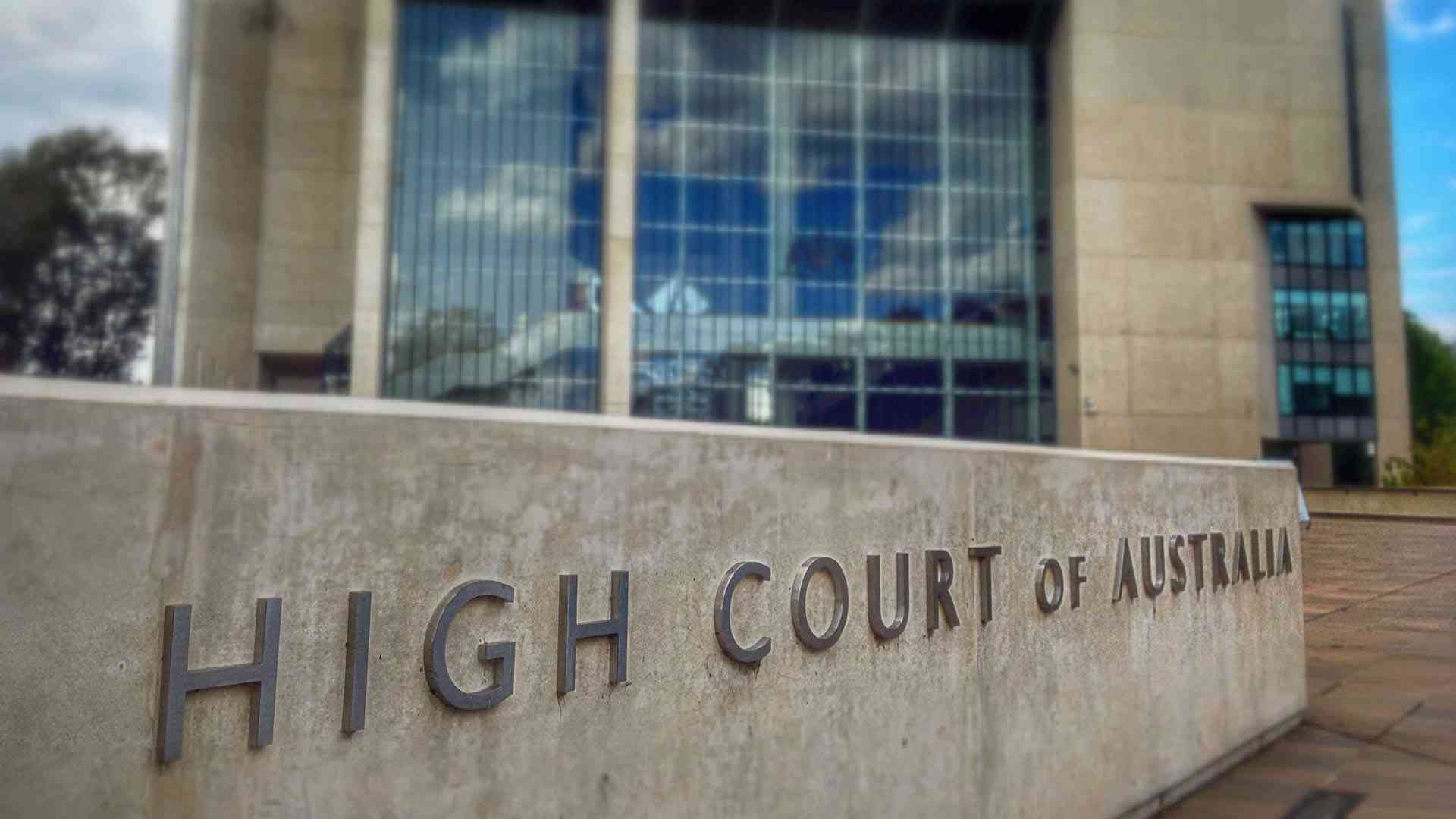
The High Court of Australia (the Court) has confirmed that institutions may be legally responsible for child sexual abuse committed by individuals acting in positions of authority, even where the abuse involved deliberate criminal conduct.
In AA v Trustees of the Roman Catholic Church for the Diocese of Maitland-Newcastle, the Court held that the Diocese breached a non-delegable duty of care owed to a child who was sexually assaulted by a priest in 1969.
In doing so, the Court revisited and overturned part of the long-standing decision in New South Wales v Lepore (2003) (Lepore) which had previously been understood to limit the application of non-delegable duties where harm resulted from intentional criminal acts.
The decision represents an important development in the law relating to institutional liability for abuse and will likely affect how future claims against organisations are argued.
Background
The plaintiff, AA (a pseudonym), was 13 years old in 1969 when he attended scripture classes taught by Fr Ronald Pickin (Fr Pickin), a priest within the Diocese of Maitland-Newcastle (the Diocese).
Fr Pickin invited AA and other boys to attend the parish presbytery on Friday evenings. During these gatherings, the boys were provided with alcohol and cigarettes and permitted to gamble using a poker machine located in an area near the priest’s bedroom.
AA alleged that Fr Pickin sexually assaulted him multiple times in that location, away from the view of others. Fr Pickin died in 2015.
AA later commenced civil proceedings against the Diocese in the Supreme Court of New South Wales, seeking damages for the harm he suffered.
At first instance, the trial judge accepted AA’s evidence and found the Diocese liable. The Supreme Court held that the Diocese was vicariously liable for the priest’s actions and that it had breached a duty of care owed to AA.
However, on appeal the New South Wales Court of Appeal overturned that decision. The Court of Appeal relied on the earlier High Court authority in Lepore and held that a non-delegable duty could not apply where the harm resulted from an intentional criminal act.
AA appealed that decision to the High Court.
What the High Court Found
The High Court ultimately allowed AA’s appeal and restored the finding that the Diocese was liable.
The Court accepted the trial judge’s findings that Fr Pickin had sexually assaulted AA and that the abuse caused both immediate injury and long-term psychological harm.
The Court found that the Diocese owed AA a non-delegable duty of care while he was under the supervision or authority of one of its priests. Because the assaults occurred in circumstances where Fr Pickin was acting in his capacity as a priest and exercising authority over the child, the Diocese was responsible for the breach of that duty.
In reaching this conclusion, the Court determined that the earlier reasoning in Lepore should no longer be followed to the extent that it prevented non-delegable duties from applying to intentional criminal acts.
Understanding Non-Delegable Duties of Care
A non-delegable duty of care arises in situations where one party has assumed responsibility for the care, supervision or control of another person who is particularly vulnerable.
In these circumstances, the duty-holder must do more than simply take reasonable care themselves. The law requires them to ensure that reasonable care is taken by those performing the relevant functions on their behalf.
The High Court concluded that the Diocese owed such a duty to children interacting with its priests. In particular, the Court considered that the Diocese:
- placed priests in positions of authority within parishes;
- expected priests to develop pastoral relationships with children as part of their role;
- understood that children were especially vulnerable to harm;
- had the practical ability to supervise and control priests; and
- should have recognised the risk that children under the supervision of clergy could
suffer harm.
These factors meant that the Diocese had assumed responsibility for the safety of children who came under the authority of its priests.
Intentional Criminal Conduct and Institutional Responsibility
The main issue in the case was whether a non-delegable duty can extend to intentional criminal conduct, such as sexual assault. The High Court confirmed that it can.
The Court reasoned that the criminal nature of the conduct does not automatically place it outside the scope of a duty of care. Instead, the key question is whether the type of harm suffered was a foreseeable risk within the relationship of supervision or control.
In reconsidering Lepore, the Court held that excluding intentional wrongdoing from the scope of non-delegable duties had hindered the coherent development of the law. The Court therefore overturned that aspect of the earlier decision.
Damages and Statutory Limits
The High Court also considered the effect of the Civil Liability Act 2002 (NSW) on the damages awarded to AA.
While the trial judge had awarded damages of $636,480, the High Court determined that the statutory limits on personal injury damages applied to the Diocese’s liability. As a result, the damages payable was reduced to $335,960.
Although this issue arises from New South Wales legislation, it may affect how damages are assessed in similar claims within that jurisdiction.
What This Means for Organisations
For organisations that work with children and young people, the decision highlights the importance of strong safeguarding frameworks, clear governance structures and effective oversight.
Thus, this decision significantly clarifies the circumstances in which institutions may be held liable for abuse committed by individuals acting under their authority. Key implications include:
- Institutions may be liable for abuse committed by delegates, even where those
individuals are not employees in a strict legal sense; - Intentional criminal conduct may fall within the scope of a non-delegable duty,
meaning organisations cannot avoid liability simply because the wrongdoing was
deliberate; - Relationships involving care, supervision or authority over children may give rise to heightened legal responsibility;
- Courts may take a broader view of foreseeability in environments where children are under the supervision of adults in positions of trust.
How Can Safe Space Legal Help?
Safe Space Legal has extensive experience working with organisations that work with children and young people across Australia to strengthen their safeguarding frameworks and ensure they are meeting their child safety obligations. We provide comprehensive support including:
- Conducting Child Safety Training, including Duty of Care;
- Drafting best practice child safety policies, procedures and codes of conduct;
- Conducting gap analysis audits of critical incidents;
- Providing training on legal obligations, duty of care and child safety;
- Conducting trauma-informed child safety investigations which are compliant with
relevant state and territory schemes; and - Providing advice on risk mitigation.
Contact office@safespacelegal.com.au or call 03 9124 7321 to organise a complementary discussion in relation to your organisation’s child safety and safeguarding needs.
Contact us for a 30-minute consultation to discuss your organisation’s safeguarding needs

Brett is a Senior Associate at Safe Space Legal with over 25 years of experience working with children, young people and people with disability. He is passionate about protecting the rights and ensuring the safety of children and vulnerable people.
Brett is a highly skilled and experienced lawyer having worked in child protection, youth law and safeguarding, where he has advocated to protect children and young people.