
Keeping Children Safe Online: What the Roblox Enforcement Action Means for Australian Organisations
For many Australian children, online gaming is part of everyday life. Platforms such as Roblox provide opportunities for creativity, play and social connection, but they can also create risks of inappropriate contact, grooming and exploitation.
Recent action by Australia’s eSafety Commissioner (eSafety) against Roblox reinforces the important safeguarding principle that online child safety cannot rely solely on a platform’s assurances that its systems are working. Safety measures need to be effective, tested and independently verified.
eSafety has secured a court-enforceable undertaking from Roblox after testing identified gaps in its child safety measures. Roblox has been given three months to introduce additional protections and must engage an independent third-party auditor to assess the effectiveness of its safety measures, including its age-estimation technology.
What is Roblox and What Child Safety Issues Were Identified?
Roblox is an online gaming and creation platform where users can play games, create experiences and interact with other users. Because it is also a social environment, children can communicate with other users, create social connections and participate in online communities.
According to eSafety, approximately 1.7 million Australian children use Roblox. Testing in 2026 found that adults could send connection requests to Australian children without parental or carer consent, and children and adults could interact through forums outside games without approval. Some children’s profiles and connection information could also be visible to other users.
In response, eSafety has required Roblox to strengthen protections, including preventing adults from contacting unknown children without parental consent, making children’s accounts private by default, improving complaint and reporting systems, and independently auditing its safety measures.
Why Are These Safeguarding Measures Important?
One of the most serious risks associated with online platforms is grooming.
Online grooming can involve an adult gradually building trust with a child for an improper or sexual purpose. What appears to be an ordinary interaction in a game can develop into manipulation, requests for personal information or images, sexual communication, or attempts to move communications with the child to another online platform.
Australian criminal law prohibits forms of online grooming. Section 474.27 of the Criminal Code Act 1995 (Cth) makes it an offence to use a carriage service to groom a person under the age of 16 for the purpose of facilitating sexual activity.
However, protecting children online cannot rely only on prosecuting offenders after harm has occurred. Platforms and organisations also have a role in identifying risks and implementing preventative safeguards.
What Legal Action is Being Taken?
The Roblox undertaking highlights the growing role of the eSafety Commissioner in enforcing Australia’s online safety framework.
The Online Safety Act 2021 (Cth) provides the legislative framework for Australia’s online safety regime and enables eSafety to regulate and enforce industry standards designed to address serious online harms.
The relevant online safety standards address concerning risks to children, including adult-to-child contact, children’s privacy and reporting mechanisms.
The court-enforceable undertaking is particularly significant because Roblox must also obtain an independent assessment of its safety systems. eSafety Commissioner Julie Inman Grant said platforms should not be able to effectively “mark their own homework”
If Roblox breaches the undertaking, eSafety can apply to the Federal Court for orders requiring compliance.
What About Australia’s Under 16 Social Media Laws?
Australia’s social media minimum age restrictions, which commenced on 10 December 2025, require age-restricted social media platforms to take reasonable steps to prevent children under the age of 16 from having accounts.
However, this does not mean every online platform used by children is automatically covered by those restrictions. eSafety’s previous assessment was that Roblox was not an age-restricted social media platform for the purposes of the relevant provisions of the Online Safety Act.
This distinction is important. Child safety cannot depend on a single age restriction. Children continue to use gaming platforms, educational technology, messaging services and other online environments, each with different risks.
What Does This Mean for Children and the Public?
The Roblox case demonstrates an increasing expectation that online services used by children should be designed with safety in mind.
For children, stronger protections can mean greater privacy, fewer opportunities for unknown adults to initiate contact and better systems for reporting concerns.
For parents and carers, it is also a reminder that online safety requires active oversight and open conversations with children about who they communicate with and what they do online. Most importantly, the case reinforces the importance of prevention. Safeguarding should not begin only after a child has experienced harm.
What Does This Mean for Organisations Working with Children?
Schools, sporting organisations, community organisations, disability organisations, youth services and other child-facing organisations may not operate Roblox themselves, but they still need to consider the online environments children access in connection with their activities.
Organisations should consider whether their safeguarding framework addresses:
- Online interactions and communication;
- Risks associated with gaming and social platforms;
- Online grooming and technology-facilitated abuse;
- Staff and volunteer awareness of online risks;
- Complaints, disclosures and reporting processes; and
- Risks associated with third-party technology providers.
Child Safety Does Not stop at the Organisation’s Front Door
A child may participate in an organisation’s program during the day and engage with other participants through an online platform that evening. They may use an organisation’s social media page, messaging platform or online learning environment.
This means organisations need to ask:
- What online environments are children accessing through our programs?
- What risks exist in those environments?
- Do our policies and Codes of Conduct address online interactions?
- Do staff and volunteers know how to identify and respond to online grooming or other concerns?
- Do children and families know how to report a concern?
An organisation should not simply assume that a third-party platform’s safety settings are sufficient. Child-safe practice requires organisations to understand the risks and take reasonable steps to manage them.
Safeguarding is not only about responding when something goes wrong. Effective safeguarding requires organisations to identify risks, strengthen systems and create environments that reduce opportunities for harm.
The Roblox case provides a timely reminder that having a policy is not the same as having an effective safeguard. Keeping children safe online requires organisations to understand where harm can occur, identify the risks and take practical steps to prevent it.
How Can Safe Space Legal Help?
The team at Safe Space Legal have extensive safeguarding experience. We have worked with many organisations across Australia to ensure they are meeting their legal obligations.
We work with organisations to respond proactively to evolving online risks and meet their safeguarding obligations with confidence. Our team works with organisations to develop and strengthen child safe frameworks that reflect real world digital environments.
Safe Space Legal provides the following services to ensure organisations meet their legal obligations:
- Supporting organisations to have robust recruitment strategies to keep children and young people safe;
- Providing organisations advice on their legal obligations and compliance;
- Drafting best practice child safety policies, procedures and codes of conduct;
- Conducting gap analysis audits of critical incidents;
- Providing training on legal obligations, duty of care and child safety;
- Conducting child safety investigations which are compliant with relevant state and territory schemes; and
- Provide sound legal advice on risk mitigation.
Contact office@safespacelegal.com.au or call (03) 9124 7321 to organise a complementary discussion in relation to your organisation’s safeguarding needs.
Contact us for a 30-minute consultation to discuss your organisation’s safeguarding needs
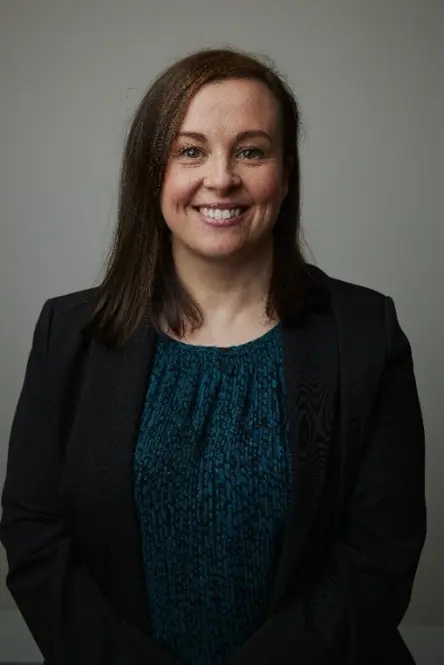
Patrice Fitzgerald is the Principal Lawyer and Director of Safe Space Legal. Patrice has over 20 years of experience working in the legal sector, predominantly in safeguarding and child protection.
Patrice has extensive expertise supporting organisations to comply with their safeguarding obligations. Alongside her role at Safe Space Legal, Patrice is also a Member of the Victorian Civil & Administrative Tribunal in the Review and Regulation List (Child Welfare).
- Patrice Fitzgerald
- Patrice Fitzgerald
- Patrice Fitzgerald
- Patrice Fitzgerald
- Patrice Fitzgerald
- Patrice Fitzgerald
- Patrice Fitzgerald
- Patrice Fitzgerald
- Patrice Fitzgerald
- Patrice Fitzgerald
- Patrice Fitzgerald
- Patrice Fitzgerald
- Patrice Fitzgerald
- Patrice Fitzgerald
- Patrice Fitzgerald
- Patrice Fitzgerald
- Patrice Fitzgerald